
Medical Alerts at Learning Groups
Student safety and well-being while attending any Learning Group opportunity is important to us. This page provides information to families about what they can expect when medical alerts are noted on an LG application form. HCOS student medical alert information is now maintained in Encom and can be updated by parents as needed (at a minimum, we request an annual review).
You are encouraged to be proactive and complete the Medical Alert Plan in Encom; if your child signs up for a Learning Groups opportunity, the information will be reviewed, and the LG Office may reach out for any further information required. Students from other schools will be requested to complete an online form.
It is important to remember that Learning Groups personnel do not know your child as well as you do, and will be part of a larger group instead of you and your child(ren) at home. All LG activities vary, and depending on the scope and nature of the offering and the medical alert involved, you may be requested to remain on-site to support your child.
Minor Allergies- unless there are questions or comments to indicate otherwise, the information provided within the online application is what will be provided to LG personnel.
Examples may include: seasonal allergies where no medication is required, Celiac, etc.
Medical Conditions- a Medical Alert Plan will be requested to ensure personnel is aware of symptoms to watch for, and any emergency action to take. In the case of seizures, a support plan will be part of the Medical Alert Plan form.
Examples may include: a seizure disorder where the condition is under control, migraines, a heart condition, etc.
Serious Medical Alerts or Life-Threatening Allergies- a Medical Alert form will be requested so that personnel can be aware and we can ensure appropriate support is provided, both to avoid a situation becoming an emergency and how to deal with one in the event an emergency arises. Additional support documents may be required, including a Permission to Administer Medicine form (must be completed by a physician).
Examples may include: Diabetes, anaphylactic allergic response
Important: If an EPI-PEN has been prescribed, this is considered life-threatening regardless of frequency of use. As per the HCOS Anaphylaxis policy, A Permission to Administer Medicine Form will be required to be on file in order to drop your child off at a Learning Groups opportunity.
Encom Medical Alert Module
HCOS-enrolled and Heritage-Registered students will see the new Medical Alert Plan icon on their home page for each student when logging into Encom. Based on the status of the form, there may be a coloured shape to indicate that a form has been requested and submitted, documents are still to be added, or completed.
If the green check mark is not showing, there are still outstanding pieces. Please watch for emails from medical@onlineschool.ca to ensure all pieces are completed in a timely manner.
If blank, N/A or has not yet been requested
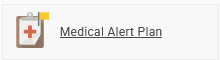
Requested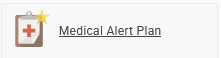
Parent Submitted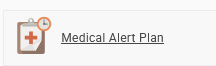
Waiting on documents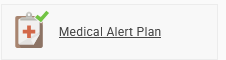
All documentation complete
Upon clicking the icon, the form will open up with initial contact fields to complete or edit, including contact information.
The next page includes symptoms and action steps. Please include details so that we are adequately aware of symptoms, preventative measures, and the action needed should an incident arise. A Permission to Administer Medicine form is also required if applicable.
Suggested completion of Action steps, being very clear when there are multiple conditions:
Step 1: Triggers and symptoms
Step 2: Initial response
Step 3: Escalated response
Step 4: Emergency response - Call 911, accompany or follow the ambulance taking the student to the hospital, contacting parents and following up as needed.
It is our protocol that LG personnel cannot administer any medication unless a Permission to Administer Medicine form, completed by a physician, is on file. Emergency Medication must be single-dose, auto-injector. Oral antihistamines will not be administered by school personnel.
For students experiencing difficulty breathing and who are diagnosed with Anaphylaxis and Asthma, it is important to administer both medications prescribed, epinephrine first, followed by the inhaler and continue with emergency protocols.
Examples:
Where there are multiple conditions, one of which is anaphylaxis, action step 1 should be:
"If Anaphylaxis response is suspected, please proceed with Emergency Anaphylaxis procedures. When condition is present with multiple symptoms, it is best to err on the side of caution."
1. Medical Condition: Other
-
food allergies - apples
Step 1: ____ (name of child) can have evidence of a reaction by touching the allergen, make sure the desk is well cleaned, and that food is not shared. This is usually hives and is not anaphylaxis.
Step 2: If ______(name of child is very uncomfortable, please call parent to come and respond to their medical needs.
2. Medical Condition: Other
Step 1 Student is mildly allergic to grass, cats and dairy. Student usually takes a Benadryl before class (at home) when allergy season is in full swing.
Step 2 ______(name of child) will start coughing, sneezing and get red, itchy eyes when he/she is having an allergic reaction.
Taking an antihistamine will usually clear up his/ her symptoms, _______ will have Bendaryl and will self-administer.
Step 3 ᅠIf the antihistamine does not work, ______(name of child) has a puffer (can self-administer) that he/ she takes to clear up his symptoms.
Step 4 If the student is still struggling, please call _______ (name of parent or guardian) to come and respond to their medical needs.
3. Medical Condition: Anaphylaxis
Allergy: nuts
Complete action steps with information on what to look for and each step, in addition to the Anaphylaxis Support Plan.
Step 1:
If an anaphylaxis response is suspected, please proceed with Emergency Anaphylaxis procedures (EpiPen) as per school policy.
Step 2:
Symptoms will occur with contact to nuts, not just ingestion.
If ___(name of child) starts wheezing, administer epinephrine.
Step 3:
Call 911, accompany or follow the ambulance taking the student to the hospital, contacting parents and following up as needed.
4. Medical Condition: Diabetes
Please print and complete this Diabetes Support Plan. Once complete, please email it to medical@onlineschool.ca. Upon receipt, we will upload it to the Encom Medical Alert Plan. Any further information you would like to add to this form can be outlined in the Action Steps (examples provided).
Step 1
Please see the uploaded Diabetes Support Plan for this student and follow the steps as outlined.
Step 2
Treat hypoglycemia by administering fast-acting glucose provided in the medical kit.
Call the parent or guardian to treat hyperglycemia.
Step 3
In case of severe hypoglycemia resulting in seizure or loss of consciousness, administer (per Permission to Administer form, not insulin) and call 911. Accompany or follow the ambulance taking child to the hospital, contact parents and follow up as needed.
5. Seizures
Please print and complete the Seizure Support Plan (parent completes the orange section and forwards to their physician to complete their section in green). Once complete, please email it to medical@onlineschool.ca. Upon receipt, we will complete the school section in blue and upload it to the Encom Medical Alert Plan.
Step 1: Please see the uploaded Seizure Action Plan for this student and follow the steps as outlined.
Step 2: Provide details on what symptoms to watch for.
Step 3: Call 911, accompany or follow the ambulance taking the student to the hospital, contacting parents and following up as needed.
6. Asthma (of all levels of severity)
Please print and complete this Asthma Action Plan (Ages 5-11 and Ages 12-17). Scan or take a picture and email the completed document(s) to medical@onlineschool.ca for upload within the Medical Alert Plan module.
Step 1
a) Will bring inhaler, needs access to, but does not need assistance, to administer it if required. The Teacher will be informed of its whereabouts. My child is responsible for knowing the location of the inhaler at all times.
b) If ____ (child name) is experiencing shortness of breath or starting to look flushed (add any symptoms to watch for) administer _____ and observe. Student will need assistance with _____.
Step 2 If breathing is not resolving within 5 minutes, call parent to attend to ____ (child name)’s medical needs.
Step 3 In the occasion that ____ (child name) is experiencing severe issues breathing, call 911 and accompany or follow the ambulance taking the student to the hospital, contacting parents and following up as needed.
7. Multiple Conditions
Step 1
If similar symptoms present, such as hives or itchiness, and an anaphylaxis response is suspected, please proceed with Emergency Anaphylaxis procedures. If similar symptoms present for both asthma and anaphylaxis, and an anaphylaxis response is suspected, administer both the EpiPen and prescribed asthma medications. When multiplecondition conditionsis present with similarmultiple symptoms, theit is best course of action is to err withon the side of caution.
Step 2:
Allergy to nuts: Anaphylaxis when ingested
Asthma: May have breathing issues when she has a bad cold or due to intense exercise.
Step 3:
Asthma - Will bring inhaler, needs access to, but does not need assistance, to administer it if required. The Teacher will be informed of its whereabouts. My child is responsible for knowing the location of the inhaler at all times. Please call parent if breathing does not resolve within ____ minutes.
Step 4:
Anaphylaxis- administer EpiPen and call 911.
Asthma- if severe breathing issues, call 911
Accompany or follow the ambulance taking the student to the hospital, contacting parents and following up as needed.