Please note that in grades 10-12 taking an online course starts the creation of a BC Transcript for your student.
#### What courses can I take? Please see our [course directory here](https://courses.onlineschool.ca/#schools=BCOS&course-types=Online&grades=Grade5,Grade6,Grade7,Grade8,Grade9). #### How do I apply? Please [fill out our application](https://encom.onlineschool.ca/application/bcos/new/information) through our cross enrollment division, BC Online School. Select the appropriate grade level and course you wish to apply for.In the ‘How did you hear about us?’ box, please include under Other: Registered Student. This will help us expedite the application.
# Registered Homeschooling with HCOS #### Parent Responsibilities Through the registered homeschool option, families have the freedom and responsibility to design their child’s homeschooling educational program (planning, delivery, and assessment) as students have opted out of the BC education system Parents develop the learning plan, choose the curriculum and facilitate learning activities separate from the supervision of a teacher. #### Getting Started as a Registered Homeschool Family with HCOS In many ways, homeschooling starts in a child’s first years. For instance, before children turn five, parents share their faith, read to their children, introduce number sense, explore nature and community, and encourage physical development. Homeschooling in the “school years” extends this foundation. The homeschooling environment and approach may be different in each home. When developing an education plan, parents may consider their family’s faith, the child’s learning needs, gifts, and even their parenting approach. For instance, if one's parenting approach leans to the structured and scheduled side, one’s homeschooling approach may be similar. Many families consider this when choosing a curriculum. Some families first borrow curriculum from the [HCOS Learning Commons ](https://learningcommons.ca/)to assess whether it will support their family's faith, child’s needs, and “homeschool method/style” (e.g., classical, Charlotte Mason, unit study, unschooling, Montessori, school-at-home, etc). Parents may also choose which sections or pages of the curriculum to use with their children based on their learning needs and interests. Consider curriculum as tools; choose which tools will help you in different situations and times. #### Learning Common Resources While BC Ministry of Education funding is unavailable to registered homeschool students, Heritage Christian Online School (HCOS) provides various learning resources to registered homeschool families through the HCOS Learning Commons. To view the resources available to registered homeschool students, visit [this page](https://sophie.onlineschool.ca/books/learning-commons-for-families/page/at-a-glance-resources-whats-available-to-me). For more details, refer to the [Learning Commons for Families](https://sophie.onlineschool.ca/books/learning-commons-for-families) book in SOPHIE. To help families choose resources, the HCOS Learning Commons has compiled a list of recommended [Curriculum Options](https://learningcommons.ca/curriculum-options/). #### HCOS Learning Groups Registered homeschool students are invited to attend HCOS Learning Camps opportunities throughout the province. For more information on HCOS Learning Groups and Offerings, go [here](https://learninggroups.ca/), and for more details, visit the [HCOS Sophie Information for Families Learning Groups Book](https://sophie.onlineschool.ca/books/information-for-families/chapter/learning-groups). Community Connections/+ are not available to registered homeschool students. To receive an email notification for upcoming Learning Group opportunities in your chosen region, sign up for the HCOS Learning Groups “[Get E-Alerts](https://learninggroups.ca/participate/)” for their BC region. #### Registered Homeschooling in the Grad Years Registered homeschool students cannot obtain a BC Certificate of Graduation (Dogwood Diploma) by homeschooling alone. However, registered homeschool students may transfer to enrolled status in their Grades 10-12 to work towards a BC Dogwood Diploma. Grades 10-12 may take online courses through the [BC Online School](https://bconlineschool.ca/) (a Department of Heritage Christian Online School) and retain their registered homeschool status. BCOS courses are BC accredited courses written by HCOS. Many post-secondary institutions provide alternative admissions pathways. Registered homeschoolers interested in post-secondary institutions should approach the institution to research admission requirements and confirm eligibility. Once known, registered homeschool students can work towards pre-requisite requirements in their Grad years. In some cases, these may include accredited online courses. #### BC Educational Learning Standards *(optional)* While registered homeschoolers are **not** required to cover the provincial learning standards, some families use the learning standards as a general guideline in designing their educational plans. [BC’s Course Curriculum](https://curriculum.gov.bc.ca/)/Learning Standards. Using the [Continuous Views](https://curriculum.gov.bc.ca/curriculum/continuous-views) documents provides the incremental progression of the Learning Standards (Big Ideas, Competencies, and Content) over school years. 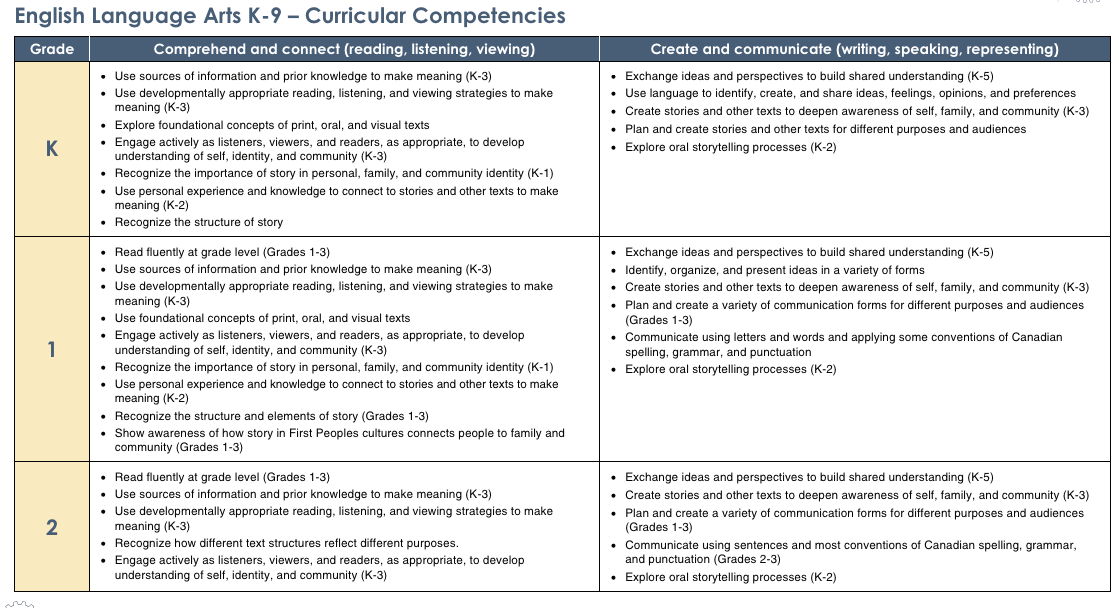 #### HCOS Registered Homeschool Liaison Contact the HCOS Registered Homeschool Liaison, [Claire Pollok](mailto:cpollok@onlineschool.ca), with further registered homeschool inquiries. # What to expect when moving from Registered to Enrolled? #### Registered to Enrolled Registered homeschool students cannot obtain a BC Certificate of Graduation (Dogwood Diploma) by homeschooling alone. However, registered homeschool students may transfer to enrolled status for their Grades 10-12 years to work towards a BC Dogwood Diploma. This process requires conversations around what concepts/courses have been covered and therefore which courses are a good starting place for your child. This may also involve an official challenge process in order for your child to receive course credit in an area of proficiency. See below for information on course challenges. Students may also be asked to complete numeracy or literacy assessments to help ensure their success in the courses they plan on taking. For more on the BC Dogwood and requirements, [please see here](https://sophie.onlineschool.ca/books/information-for-families/page/grad-orientation-week-recordings-2024). #### Course Challenge Information ##### What is challenge? A course challenge is a means of awarding graduation credit for undocumented demonstrated prior learning. Students are entitled to use challenges to receive credit for Ministry-Development or Board/Authority Authorized Grade 10, 11, or 12 courses. ##### Challenge Process A student can challenge a course if he or she: - is currently enrolled in the school district, registered as a home schooler, or enrolled in the Distributed Learning school where the challenge is being requested; and - has not already challenged the course and received a passing grade, or completed the course through previous enrollment, or has been granted equivalency for the course; and - can give compelling evidence that he or she will succeed in the challenge assessment Prior to engaging in a challenge process, schools must review any documentation of prior learning that a student presents in order to determine if credit can be awarded through equivalency. The challenge process must assess students on all course learning outcomes (Gr. 11/12) OR curricular competencies and content (Gr. 10). Examples of challenge assessment strategies include hands-on demonstrations, oral performances, interviews, written examinations, or presentations of a collection of work. Provincial or sample exams must not be used for Challenge purposes. The cost to challenge a course is $50 per course challenged. This course fee is over and above the tuition costs a student would normally pay during the course of a school year. A challenged course is not included in the course count for tuition in a school year. #### Adult Dogwood Programing In some cases, students struggle to make the transition or complete the required number of courses necessary to receive their Dogwood. In those situations, once they reach 18 an Adult Dogwood can be explored. This is not something we want to work towards or limit students with at an early age. It is important this is only considered an option once the student is 18 years of age. **[Adult Grad Pres.pptx - Google Drive](https://drive.google.com/file/d/1sLAFwSprVes_mlyVjK93GQG1uibsAotv/view)- great for parents**